
News
February 02, 2026
HOSA Students Visit Maryland Shock Trauma Center
Danielle Choi '27
In 2023, the Maryland Department of Transportation reported more than 110,000 car crashes across the state. While each accident happened under different circumstances, many of them shared one important truth. They could have been prevented.
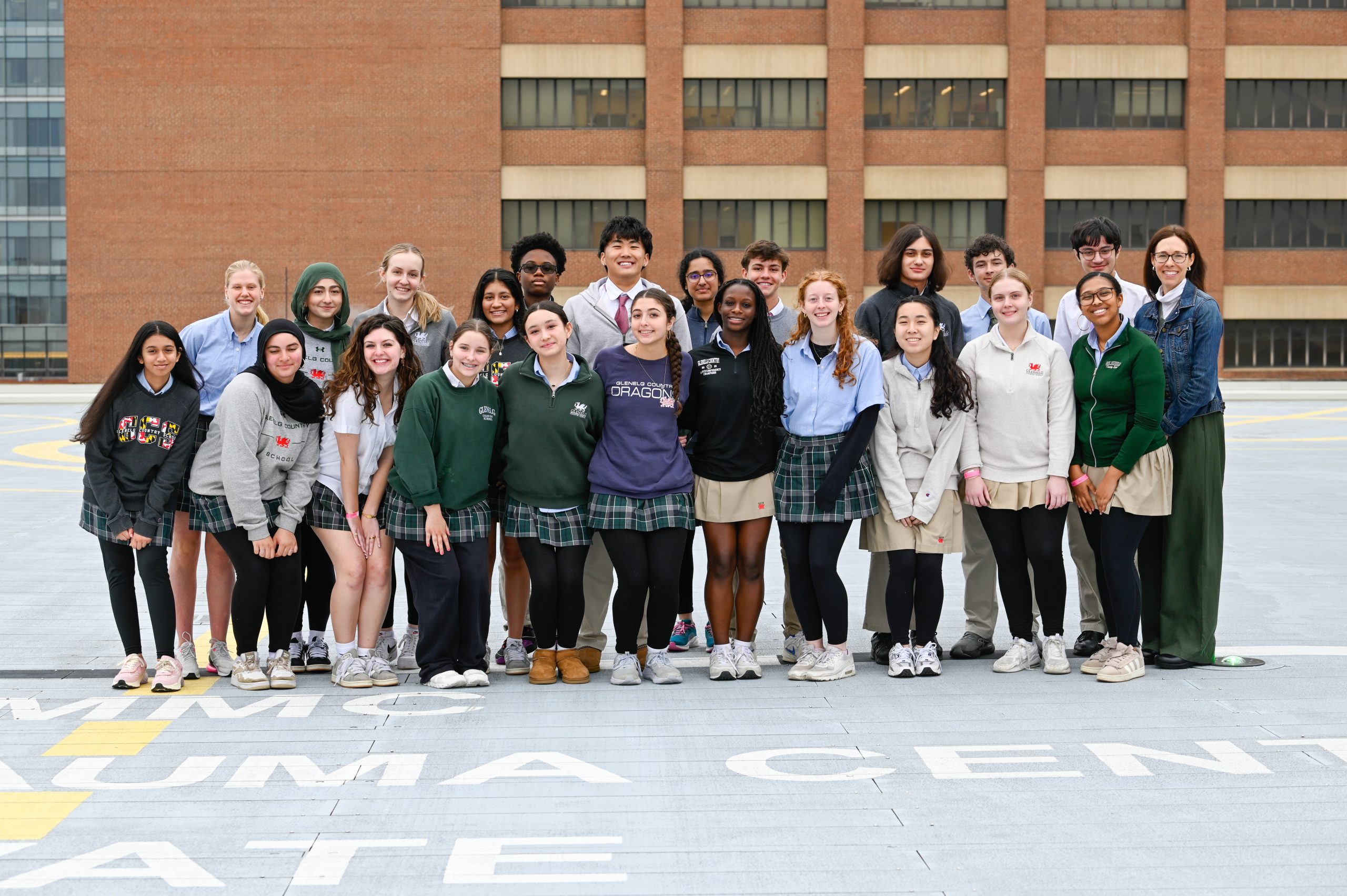
This message came to life during a recent field trip by members of Upper School‘s HOSA–Future Health Professionals to the R. Adams Cowley Shock Trauma Center at the University of Maryland. The visit was part of the center’s Minds of the Future program, which introduced students to trauma care, injury prevention, and careers in the health professions.
The Maryland Shock Trauma Center is the nation’s first integrated trauma hospital. It was founded by R. Adams Cowley, known as the father of trauma medicine, who developed the concept of the “golden hour.” This idea emphasizes that the first 60 minutes after a traumatic injury are often the most critical in saving a life. What began as two beds in a basement has grown into a world-renowned trauma center, easily recognized by the staff’s pink scrubs that represent teamwork and lifesaving care. The visit to Shock Trauma gave students a firsthand look at how trauma care and injury prevention work together to save lives.
During the visit, HOSA students participated in a simulation lab, toured the trauma center, completed Stop the Bleed training, and heard from a traumatic brain injury survivor. The program was led by Sarah Hewitt, a licensed occupational therapist and injury prevention program coordinator, who discussed the history of the Maryland Shock Trauma Center and explained how car crashes remain one of the most common reasons patients are treated there.
One of the most impactful moments was hearing from Owen Bell, a student at Bucknell University who survived a severe traumatic brain injury after a car crash. He was stabilized and airlifted by helicopter to Shock Trauma, then faced a long recovery that required him to relearn many basic skills. Hearing his story was especially powerful because he is close in age to the students. It made the dangers of unsafe driving feel real and personal, and showed how one decision can change a life.
Another highlight was the hands-on simulation lab, where students worked together to treat a high-fidelity manikin with unstable vital signs. By checking the patient’s pulse, listening to lung sounds, and reviewing the monitor, students identified an opioid overdose and administered Narcan as part of the scenario. The activity gave students a realistic look at how medical teams collaborate in emergency situations.
The field trip was an eye-opening experience that deepened students’ interest in health professions. Most importantly, it reinforced a lasting lesson about prevention. Students left knowing that their choices matter and that informed decisions can help save lives in their communities.
[su_custom_gallery source=”media: 259939,259940,259942,259944,259948,259954,259955,259953,259982,259977,259992,260004,260018,259993,260006,260025,260028,260039,260044,260050,260053,260056,260068,260060,260071,260076,259930,260102″ limit=”100″ width=”150″ height=”150″ align=”center” title=”never”]
